
Subscribe to our newsletter
Receive news and benefits on health and wellness.
What do you want to search?
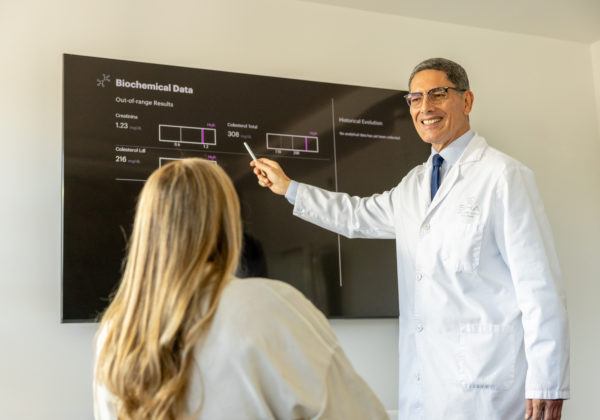
Interview with Dr. Mariel Silva, Medical Director at SHA
The Gut as a Mirror of Longevity
Why do some people thrive into their 90s—and beyond—while others experience decline much earlier?
Science increasingly points to an unexpected place: the gut.
The gut microbiome—the vast community of bacteria, fungi, viruses and other microorganisms that inhabit our digestive tract—has become one of the most promising frontiers in longevity research. According to studies from Harvard, Stanford, and the NIH, greater microbial diversity is consistently linked with longer healthspan and lifespan.
To explore what our gut can truly reveal about how long and how well we might live, Nutritionist Laura Jennings sat down with Dr. Mariel Silva, Medical Director at SHA. Dr. Silva leads a nutrition-forward gut optimization program that combines advanced medical diagnostics with integrative therapies.
The Signature of a Long Life
“When we talk about the microbiome as a biomarker of longevity,” says Dr. Silva, “we’re looking at both diversity and function.”
“In people who live long and well, we consistently see greater microbial diversity and a balanced community structure. Functionally, we focus on the capacity to produce short-chain fatty acids (SCFAs)—especially butyrate—which are metabolic by-products of beneficial bacteria and powerful regulators of inflammation.”
Populations with longer lifespans tend to host a higher abundance of Akkermansia, Christensenellaceae, Bifidobacterium, and members of the Ruminococcaceae and Lachnospiraceae families—microbes associated with energy regulation, metabolic balance, and reduced inflammation.
Conversely, higher levels of TMAO (trimethylamine N-oxide), a compound linked to oxidative stress, are often found in individuals experiencing chronic inflammation or poor gut health.
How SHA Measures and Optimizes Gut Longevity
“At SHA, we always start with a conversation,” Dr. Silva explains. “A stool test gives us a snapshot in time, but the microbiome is dynamic—it shifts with sleep, stress, diet, and movement. True insight comes from understanding daily patterns and lifestyle.”
Once the baseline is clear, SHA’s team designs a personalized gut optimization plan, combining nutrition, breathwork, movement, and targeted supplementation. “Our approach is food-first,” she adds. “Then we layer in stress regulation, restorative sleep, and precision probiotics—usually over a 6–9 month period—to support deep, measurable change.”
Stress: The Modern Gut’s Greatest Enemy
When asked what most disrupts the microbiome, Dr. Silva doesn’t hesitate: “Stress. It’s the principal destroyer of gut health in modern life.”
Chronic stress elevates cortisol, reduces microbial diversity, and can alter digestion—leading to bloating, constipation, or urgency. “That’s why I often begin treatment with breathwork. It’s my gold standard habit for the gut,” says Dr. Silva. “Regular exercise—cardiovascular training, resistance work, yoga—also helps recalibrate the nervous system into a parasympathetic, restorative state.”
Exercise itself is microbiome-active: research shows that moderate-to-vigorous activity three times per week for eight weeks can significantly increase microbial diversity and enrich SCFA-producing bacteria.
On the nutritional side, she emphasizes plant diversity—“eating the rainbow” of fibers and polyphenols—to feed beneficial bacteria and reduce inflammation. Omega-3s, too, play a key role in supporting gut integrity and resilience.
Other Hidden Disruptors
“Alcohol is probably next in line,” she notes. “It increases intestinal permeability, allowing toxins to pass into the bloodstream and trigger systemic inflammation.”
Antibiotics, while sometimes necessary, can drastically reduce beneficial bacteria and leave lasting imbalances. Ultra-processed foods—especially those rich in additives, emulsifiers and artificial sweeteners—are also emerging as silent drivers of gut inflammation and premature biological aging.
The Future of Gut Longevity Science
“The most exciting frontier,” says Dr. Silva, “is integrating microbiome data into epigenetic clocks.”
Epigenetic clocks estimate biological age based on DNA methylation patterns. When combined with microbiome diversity, glucose, lipid, and inflammation markers, they could soon create precision aging dashboards that accurately measure how fast—or how well—we’re aging.
“Microbiome composition and diversity seem to track with the pace of epigenetic aging,” she explains. “Ecosystems rich in SCFA-producing bacteria—like Akkermansia, Christensenella, and Bifidobacterium—are linked to slower biological aging, while dysbiosis accelerates it.”
Practical Steps for a Longevity-Leaning Gut
Dr. Silva offers her essentials for cultivating a microbiome that supports healthspan:
Beyond the Microbiome
As Dr. Silva concludes, “A longevity-leaning gut isn’t about chasing a miracle microbe. It’s about cultivating a resilient, diverse ecosystem built on daily habits—stress management, sleep, movement, and whole-food nutrition. The microbiome is a tool. The person is the map. The destination isn’t just more years—but more years well lived.”
Discover SHA’s Advanced Longevity and Rebalance & Energize Programs, designed to optimize gut health and extend healthspan through science, lifestyle, and personalized medicine.

Receive news and benefits on health and wellness.